Replacing a boiler in a Scottish home is a job worth getting right the first time. Pick the right type, the right size and the right brand and you spend the next ten or twelve winters in a warm house with predictable bills. Pick wrong and you live with cold rooms, awkward shower flow and a unit that costs more to run than it should. This guide walks you through the decisions that actually matter when you are choosing a new boiler in Clackmannanshire, written from what I see week in, week out across Clackmannan, Alloa, Stirling, Tillicoultry and Bridge of Allan.
Signs You Need a New Boiler
Most boilers do not fail in one dramatic moment. They drift downhill for a couple of winters before they finally pack in, and the warning signs are easy to spot if you know what to look for.
- Age over 12 years: Older non-condensing or early condensing units run at around 70 to 80 percent efficiency. A modern unit sits closer to 92 percent. The older the boiler, the more of your gas bill is heating the chimney rather than the house.
- Repeat repairs: If you have called an engineer twice in two years for the same family of fault (PCB, diverter valve, pump), the parts are starting to age out. At that point a new install often pays back faster than rolling repairs.
- Climbing pressure or constant top-ups: A boiler that needs the filling loop opened every couple of weeks usually has a leaking expansion vessel or a slow leak somewhere in the system. Worth a proper diagnosis before it becomes a bigger job.
- Cold spots and slow heat-up: If radiators take ages to warm or upstairs is always behind downstairs, the boiler is fighting the system rather than running it cleanly.
- Noisy operation: Kettling, banging or whining from the boiler usually points to limescale on the heat exchanger or a tired pump. Not always a replacement straight away, but worth a look.
- Yellow or lazy flame: A healthy gas flame is a clean blue. Anything yellow, lazy or sooty needs to be checked by a Gas Safe engineer the same week.
If two or three of those points sound familiar, it is worth getting a proper look before next winter. A planned replacement in spring or autumn is always cheaper and calmer than an emergency swap on the coldest week of the year.
Combi vs System vs Regular: Which Suits a Scottish Home
There are three boiler types still being installed in the UK. Picking between them is mostly about how much hot water you actually use and how much storage space you have.
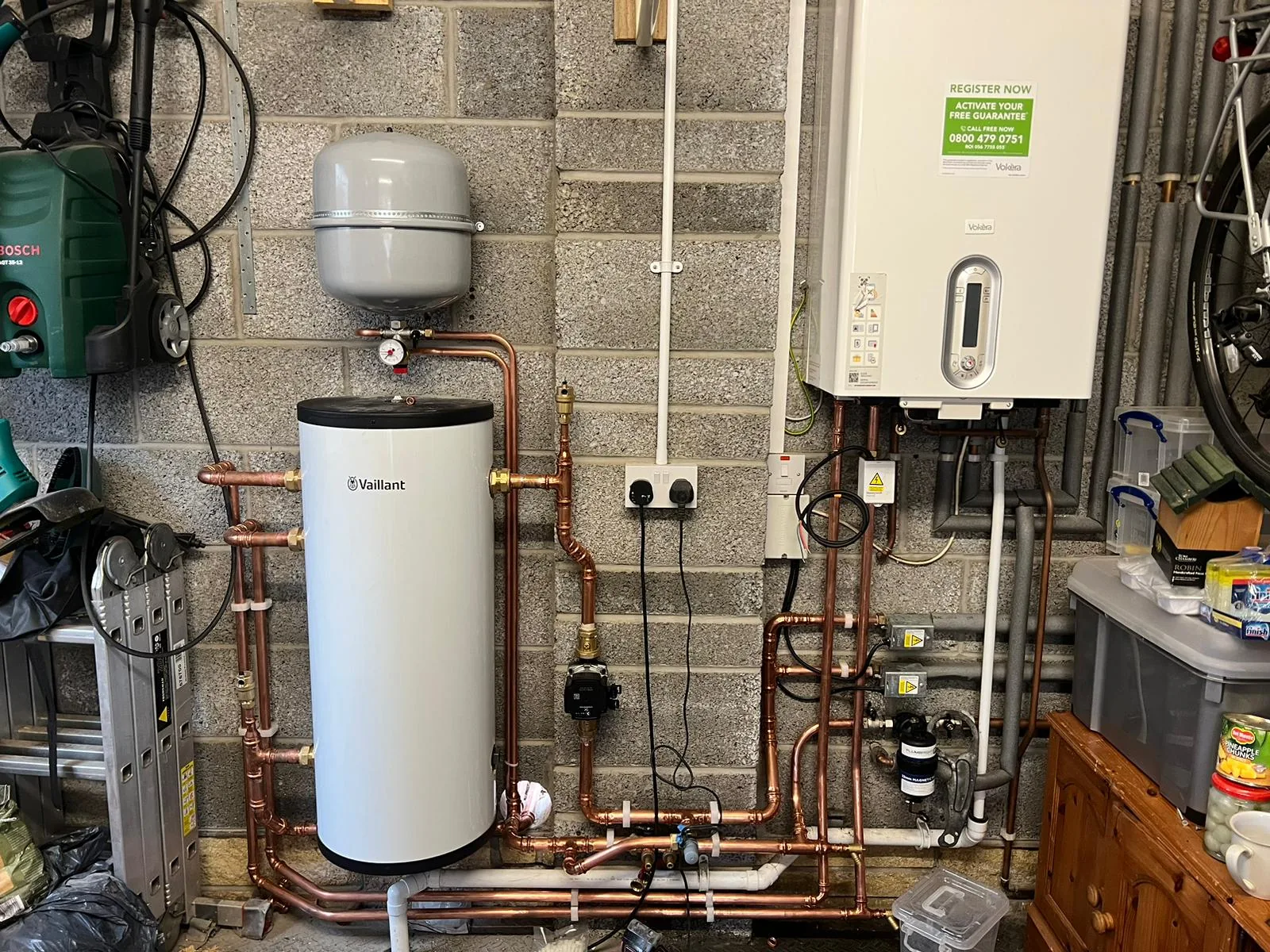
- Combi boilers: One unit, no cylinder, no loft tank, hot water made on demand. Around eight out of ten installs we do across Clackmannanshire are combi swaps. Ideal for two-bed and three-bed homes with one bathroom and a shower or two. Frees up a cupboard. Limited if two showers run at once.
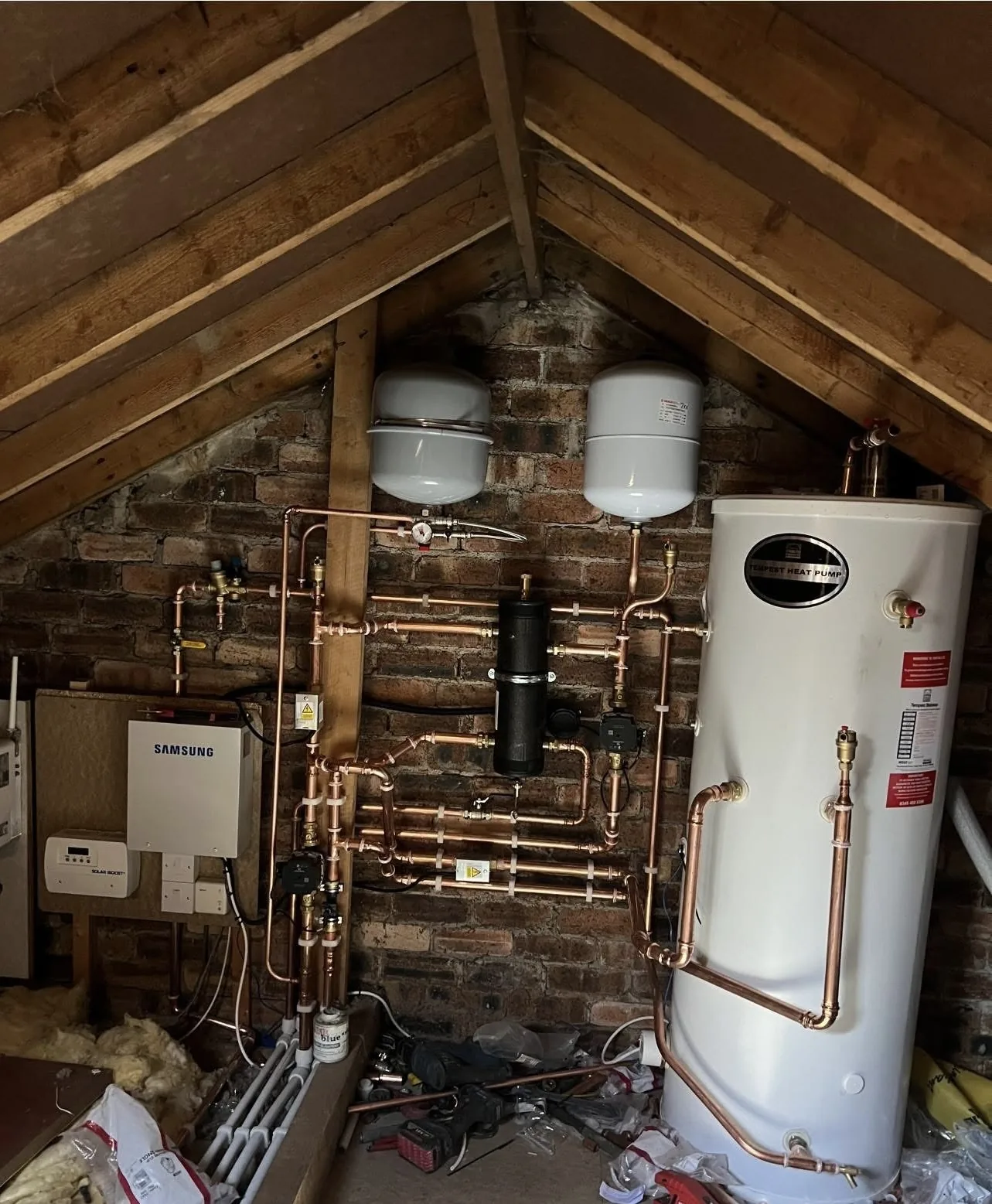
- System boilers: Boiler plus a hot water cylinder, no loft tank. Better for four or five-bed homes, two bathrooms running at the same time, or families that hammer the hot water in the morning. The cylinder gives you flow that a combi cannot match.
- Regular (heat-only) boilers: The traditional setup with a cylinder and a loft tank. We mostly fit these as like-for-like replacements where ripping out the existing pipework is not worth the cost or disruption. Big period properties in Bridge of Allan and Stirling sometimes still suit a regular system.
The right answer depends on your house, not on which type sounds modern. We size the boiler against your radiator count, hot water demand and pipework before recommending anything. A 24 kW combi in a small flat is a different conversation to a 32 kW system boiler with an unvented cylinder for a six-bed family home.
One thing worth flagging for Scottish properties: incoming mains pressure varies a lot across the Forth Valley. A combi will only run as well as the mains can feed it, and certain rural pockets near Dollar and Tillicoultry have softer flow than central Alloa. We measure the mains as part of every quote so you do not get a combi that under-performs on day one.
Want a Straight Answer on Your Boiler?
Call Liam at Nexus on 07939 042 212 for a free quote on a new boiler in Clackmannanshire, Alloa, Stirling or anywhere in the Forth Valley. Open 08:00 to 20:00, every day.
Get a Free QuoteThe Brands We Install and How to Pick
Nexus fits five core boiler brands as standard: Worcester Bosch, Vaillant, Ideal, Baxi and Glowworm. Any of them will heat your home perfectly well. The differences come down to warranty, parts availability and how the unit feels to live with year-on-year.
- Worcester Bosch: The most popular pick across our customer base. Built in the UK, very strong warranty cover (commonly 10 years on the Greenstar range when serviced annually), and parts are easy to source in Scotland. A safe default if you want a boiler that will not surprise you.
- Vaillant: German engineering, ecoTEC range is excellent. Tends to be quieter in operation and runs heat curves smoothly, which matters if you are pairing it with weather compensation controls. Slightly higher upfront, often worth it.
- Ideal: British-made (Hull). The Logic and Vogue ranges punch well above their price point, especially for straightforward swaps. A good middle-ground option if Worcester or Vaillant feel like overkill for the property.
- Baxi: Solid, no-nonsense kit, popular with landlords across the Forth Valley because the parts are cheap and engineers know them inside out. Warranty is a bit shorter on the entry models.
- Glowworm: Sister brand to Vaillant, sharing some core engineering at a lower price point. Decent value for compact spaces and rental properties.
We recommend a model based on what fits the property and the budget, not the brand we get the biggest discount on that month. If you have a strong preference (most often Worcester or Vaillant in this part of Scotland) we will absolutely fit that. If you have no preference, we will tell you the best two options for the job and let you pick.
What Installation Day Actually Looks Like
For a like-for-like combi swap with no relocation, install day is one day on site. A move from regular to combi, or a relocation across the kitchen, runs to two or sometimes three days. Either way, the rhythm is roughly the same.
- Morning, isolation and strip-out: Gas off, water off, system drained down. Old boiler disconnected, lifted out and stacked in the van for safe disposal. Floors and surfaces protected throughout.
- Late morning, prep and pipework: Pipework checked, any tired isolation valves swapped, magnetic filter and inhibitor dosing point fitted if not already in place. New flue routed if relocation is involved.
- Early afternoon, fit and commission: New boiler hung, connected, filled and pressure tested. Gas tightness check carried out and recorded. System filled and bled, controls set up, weather compensation paired if applicable.
- Late afternoon, flush and handover: Full chemical or power flush of the system depending on its condition (always agreed in advance, never sneaked onto the bill). Walk-through of the controls, manuals and warranty paperwork left with you, certificate sent through.
Most customers have hot water back the same evening. The kit goes home with us. The kitchen looks the same as when we arrived. If anything was disturbed (a tile lifted, a unit moved), we put it back the way we found it before we leave.
Pricing and the £1,600 to £3,000 Range Explained
Most boiler installs with Nexus land between £1,600 and £3,000 fully fitted. The figure shifts based on a handful of things that are easy to flag at quote stage.
- Boiler choice: A 24 kW Ideal Logic comes in cheaper than a 32 kW Worcester Greenstar. Both are good boilers, just different price points and different warranty lengths.
- Like-for-like vs relocation: Swapping a combi for a combi in the same cupboard is the cheapest job. Moving from a kitchen to an airing cupboard, or from regular to combi, adds pipework and flue work.
- System condition: If the existing radiators are full of sludge, the install needs a power flush rather than a chemical flush. That is usually £400 to £600 added on, and it pays back in protected warranty cover.
- Extras worth doing once: Magnetic filter (around £150 fitted) and a smart thermostat (around £200 fitted) are both worth lumping into the install rather than adding later. The boiler warranty often expects the magnetic filter as a baseline anyway.
Every quote is fixed in writing before any work starts. We do not do verbal estimates that creep upwards. If something genuinely unexpected shows up mid-job (rare, but it happens with old hidden pipework), we stop, explain it, price it and only continue once you say yes.
Aftercare, Warranty and Annual Servicing
A new boiler is only as good as the year-on-year care it gets. Manufacturer warranties run from 5 years on entry models up to 12 years on the higher Worcester and Vaillant ranges. The catch (and it is a fair one) is that the warranty is conditional on annual servicing by a Gas Safe engineer.
We register the warranty for you on the day of the install. From there a standard service runs between £100 and £160 depending on the model and where it is fitted. We can put a yearly reminder in the diary so you never forget, and we will lift the same boiler eight years from now if anything ever needs a repair.
Crucially, the engineer who fitted your boiler is the engineer who comes back to service it. There are no subcontractors at Nexus, no call-centre script, no rotation of unfamiliar faces. That continuity matters when you are trying to nail down a niggle five years into a system's life. We have records, we know the property, and we can pick up where we left off.
If something does go wrong inside the warranty window, we deal with the manufacturer on your behalf. You should not be on the phone to Worcester Bosch trying to argue a fault claim. That is part of what you pay an installer for.
Frequently Asked Questions
For most two and three-bed homes around Clackmannan and Alloa, a 24 to 28 kW combi covers heating and hot water comfortably. Larger four and five-bed properties, especially older Stirling and Bridge of Allan stone-built homes, often need a 30 to 35 kW unit because of higher heat-loss. We size every quote against the actual radiator count and incoming mains flow rather than guessing from square footage.
Often yes, but not always. A combi frees up the airing cupboard and the loft tank, and modern units are cheaper to run than older regular setups. The catch is that combis make hot water on demand, so households with two bathrooms running at the same time will feel the flow drop. If you have decent mains pressure and one main bathroom, the upgrade is usually a clear win. If you have two showers running at 7 am, a system boiler with a cylinder is the better answer.
Someone needs to be on the property to give us access at the start and accept the handover at the end. You do not need to sit through the whole day. A few customers will leave for work after we arrive and come back in the late afternoon for the controls walk-through, that works fine. We are open from 08:00 to 20:00 daily, so we can usually fit installs around school drop-offs and work patterns.
Yes, in most cases noticeably. A modern condensing boiler runs at around 92 percent efficiency. Pre-2005 non-condensing units often sit at 70 percent or below. On a typical Clackmannanshire household gas bill, that gap is meaningful, especially across a Scottish winter. Pair it with a smart thermostat and TRVs on the radiators and the savings stack on top of the boiler upgrade itself.